Numerical Modelling of an Underwater Micro Glider
Project Overview
Modelled and optimised an autonomous underwater glider for lake inspections, focusing on trajectory control, buoyancy-driven propulsion, and collision avoidance using MATLAB-based simulations.
Software
- MATLAB
Methods
- Ordinary Differential Equations (ODEs)
- Runge-Kutta Numerical Methods
- Shooting Method
- Hydrodynamic Modelling
Analysis
- Trajectory Optimisation
- Buoyancy Control
- Collision Avoidance Modelling
- Error vs Timestep Analysis
Project Details
Developed a MATLAB simulation modelling glider motion using ODEs, incorporating buoyancy, lift, and drag forces.
Applied Runge-Kutta methods with timestep optimisation to balance simulation accuracy and computational efficiency.
Used the shooting method to optimise buoyancy displacement, achieving accurate trajectory targeting (Volume Displacement reduced from ±60ml to ±23ml).
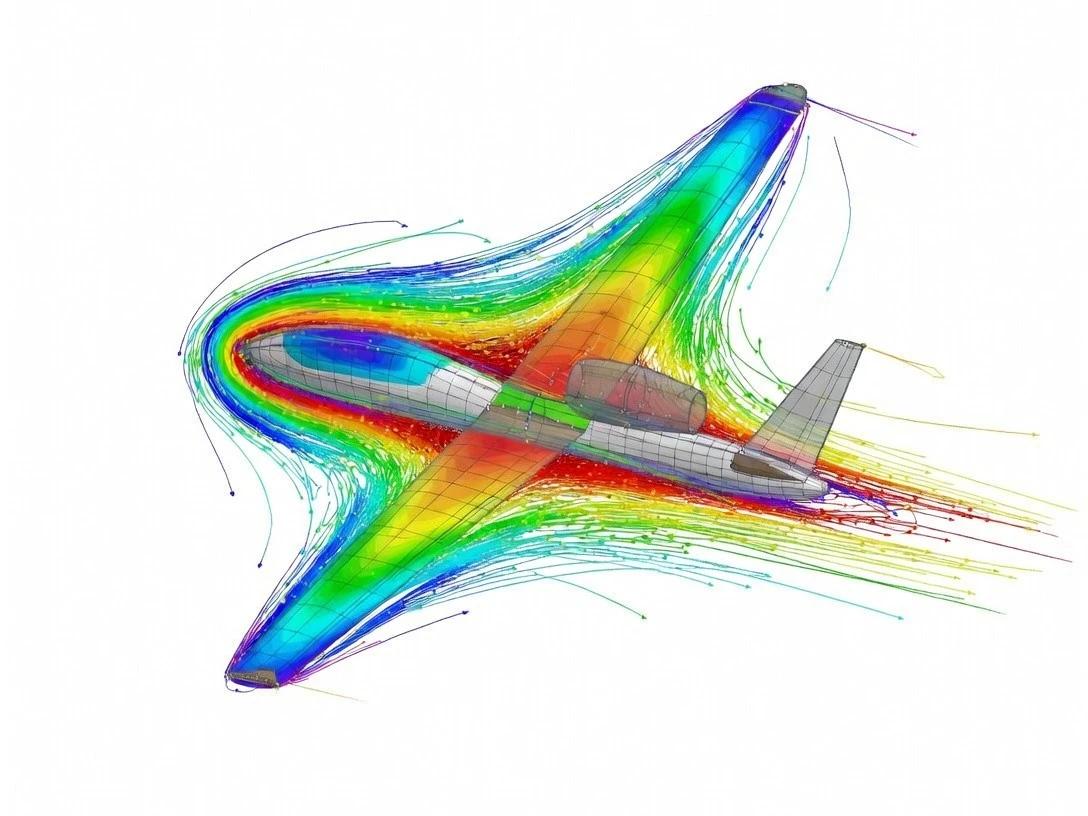
Enhanced hydrodynamic modelling by linking lift and drag coefficients to angle of attack.
Implemented an altimeter-based control system enabling depth regulation and collision avoidance with lakebed and surface.
Analysed timestep sensitivity, selecting 0.1s to minimise error while maintaining efficient computation time.
Key Results
- Achieved accurate trajectory targeting using optimised buoyancy control (ΔV = ±23ml).
- Maintained stable depth control with effective collision avoidance.
- Improved simulation realism through dynamic lift and drag modelling.
- Reduced computation time by ~90% through timestep optimisation with minimal accuracy loss.
- Demonstrated energy-efficient propulsion via buoyancy-driven motion.
Other Projects